‘Peacebuilders’ unite in The Hague
Women from areas of conflict all over the world are coming to the Peace Palace for the ICAN Women, Peace, and Security Forum 2026

By Tom Clarke

“Peacebuilders are already solving problems on their own. We never say we ‘empower’ our partners. They are already more powerful and courageous than we could ever be. Instead, we enable the connections and the spaces for others to see and hear from them. We are shining a light on the extraordinary work they do.”
Sanam Naraghi Anderlini, Founder, ICAN
In an increasingly fractured world, the word ‘security’ means different things to different people. For the men in suits in Davos it might be about nuclear deterrence and defence budgets, but the International Civil Society Action Network (ICAN) has a different take. Its mission is to bring prominence to people that live and work in conflict zones, and to amplify voices that are rarely heard in the West.
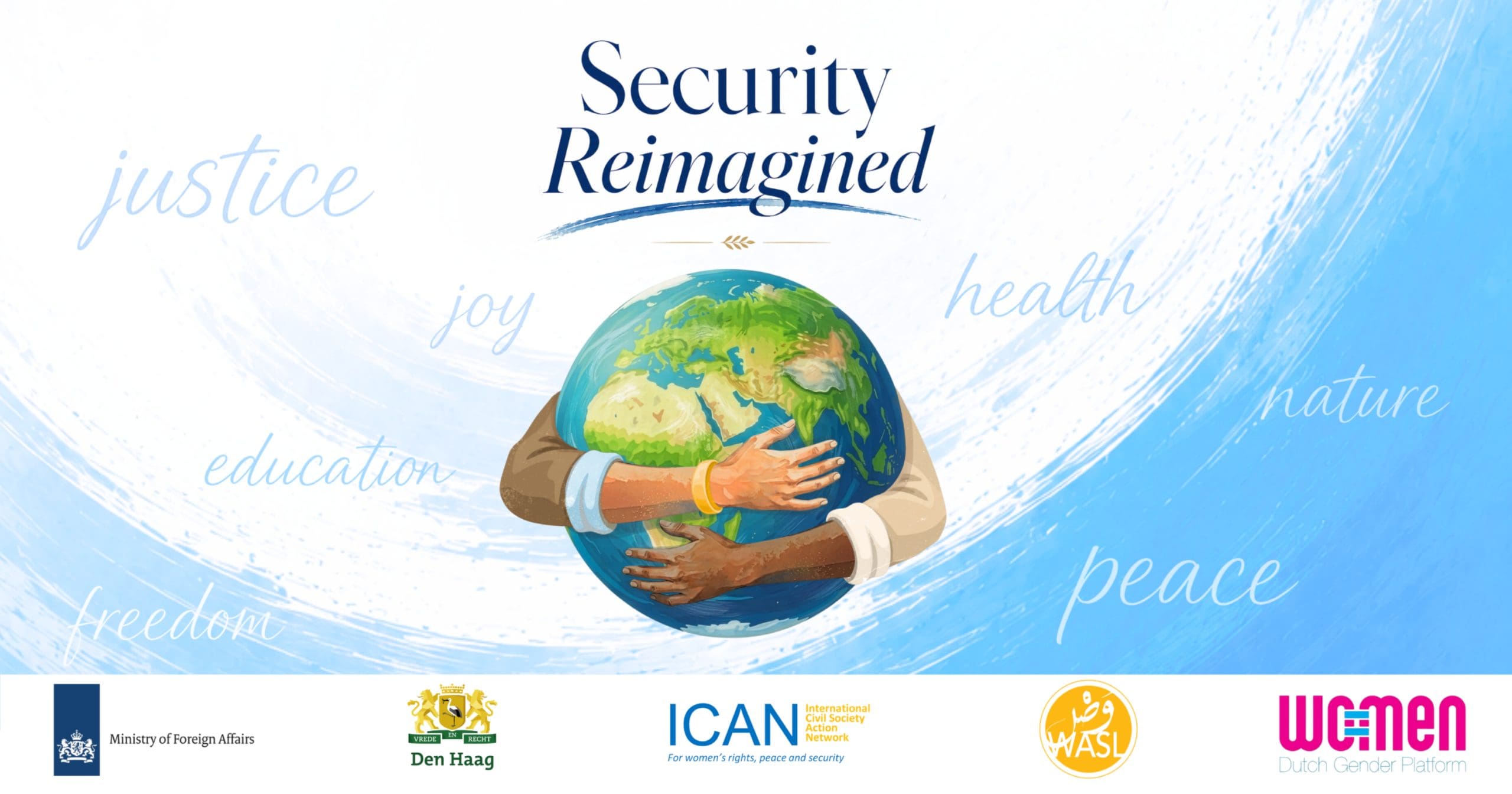
From September 29 - October 1 2026, ICAN celebrates its 20th anniversary by bringing together women from all over the world to The Hague for the Women, Peace, and Security Forum. Titled ‘Security Reimagined’, this year’s forum promises to be the largest in the organisation’s history, and includes a day of events at the city’s famous Peace Palace.
Not negotiators or mediators… but ‘Peacebuilders’
In areas of conflict, women are often abused and marginalised. Yet, time and again, they have played an essential role in conflict resolution initiatives, prioritising dialogue and peaceful outcomes.
ICAN has dozens of partners - mostly women-led networks - in 41 countries. These are grass roots organisations that face daily challenges in areas of conflict and violent extremism.
Rather than independent mediators flown in to negotiate between warring parties, they are local women grounded in lived experience. Whether it’s fostering dialogue with the Taliban in Afghanistan, or helping to deradicalize child soldiers recruited by Boko Haram in Nigeria, they know how to communicate with people on both sides of a crisis, and are committed to achieving lasting peace for their communities.


“One of the core issues we face is that the term ‘peacebuilding’ is not very well-known. Sometimes a peacebuilder sits in ambiguity. They are willing to engage people on both sides of a conflict, including armed actors and aggressors. They are trying to find solutions while maintaining the ethical lines that are fundamental to peace.”
Sanam Naraghi Anderlini, Founder, ICAN
The perfect place to talk about Peace and Justice
In a world that is becoming more isolationist, it is perhaps fitting that the Forum is being held in The Hague. While ICAN celebrates 20 years of peacebuilding work, the city’s own International Court of Justice (ICJ) is marking its 80th anniversary as a symbol for international collaboration.
The Hague has always been a place where peace and justice have been prioritised, but these are difficult times for international institutions and international law and there are clear similarities in the challenges faced by organisations like ICAN and the ICJ. The priority for the Forum is to find ways to provide a global platform for inspirational stories that have not been told before.

“Our partners are women living at the front lines where justice and injustice intersect. In the West, we so rarely get to hear these voices. So, to have these amazing people coming in from around the world and saying ‘international law matters to us’ is an incredibly powerful message. These are people who are risking their lives to uphold the principles of peace and justice, so the Peace Palace is the perfect place to play host.”
Sanam Naraghi Anderlini, Founder, ICAN
Women peacebuilders coming to The Hague
Three peacebuilders coming to The Hague and available for interviews are Lucy Talgieh, Maya Yamout and Nina Potarska.
Lucy Talgieh is the former deputy mayor of Bethlehem in war-torn Palestine. “We are looking to include more women mediators in the conflict”, she explains. “Women are more rational, we are more logical when it comes to peacebuilding. I do believe that women can change the world, it is a must. Change should come from them and through them.”
Maya Yamout runs the organisation Rescue Me with which she visits a prison in Lebanon to understand the behaviour of people that are convicted for violent extremism. She does so together with her sister Nancy and are known in Lebanon as the ‘Kamikaze Sisters’. By understanding the reasons that people have been part of violent extremism, they are able to offer them alternatives. “We have to build trust”, she explains. “We try to distance them from the crime, to prevent that they go back to violence when they leave the prison.”
Nina Potarska coordinates and supports women’s groups in occupied Eastern Ukraine that are trying to maintain and build up a social care system, while the war is still raging. “Women are the ones that provide care in Ukraine. Peace does not happen when a ceasefire is signed. We need a peace infrastructure and that is why we need to build that now, even though the war just keeps on going. Society expects actions from women. As mothers and as wives. We know how to survive and keep a community together. That is the glue of a society.”