

This year, the Europlanet Science Congress (EPSC), Europe's largest annual meeting for planetary science, celebrates its 20th anniversary. As researchers gather in The Hague to discuss the latest discoveries and future missions, they do so in a city where Christiaan Huygens laid the foundations for the study of the cosmos almost 400 years ago.
From 6 to 11 September 2026, The Hague will host EPSC at Amare. For one week, scientists from Europe and beyond will gather in the city to discuss planets, moons, space missions, and the origins of life. Researchers from Dutch universities, including TU Delft and Utrecht University, are working closely with the international organisers to bring the congress to the Netherlands for the first time.
“Hosting EPSC in The Hague provides a unique opportunity to connect the international community, but also to reflect on the history of planetary science. Christiaan Huygens' discoveries fundamentally changed our understanding of the Solar System, which makes it an extra special meeting place to discuss the future of planetary exploration.”
Dr Sebastiaan de Vet (TU Delft) and Prof. Dr Inge Loes ten Kate (Utrecht University), co-chairs of the EPSC 2026 Local Organising Committee (LOC)
Christiaan Huygens, The Hague, and planetary science
Born in The Hague, Huygens made major contributions to astronomy, physics, and mathematics. He improved the design of the telescope and, in fact, used one of his own telescopes to discover Titan, Saturn's largest moon in 1655. He also observed a dark marking on the surface of Mars and used it to track the planet's rotation, among the earliest such observations of another world. His work helped change how people understood the Solar System.
Continuing Huygens’ legacy of collaboration
Huygens' discoveries were not made in isolation. His ideas travelled through letters, networks, and exchanges with other scientists across Europe. Science grew through cooperation then, just as it does today. Centuries after Huygens studied distant worlds, EPSC continues that tradition by giving scientists from over 40 countries a place to meet, share knowledge, and explore new ideas together.

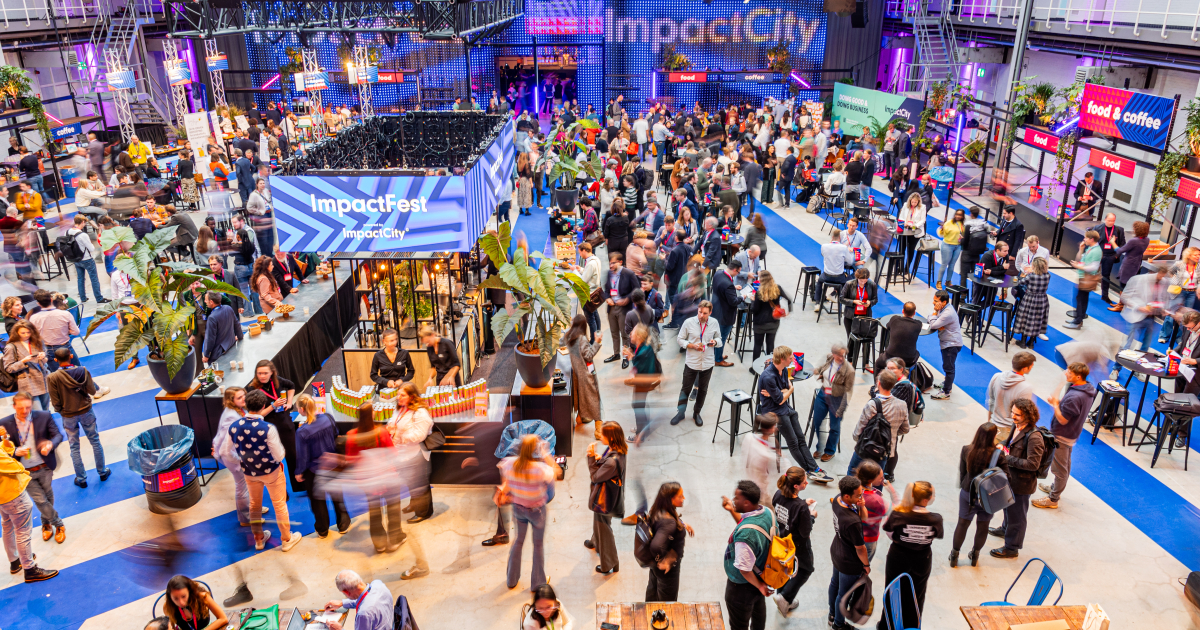
EPSC2024 Coffee Break. Photo: T. Roger/Europlanet.
Connecting planetary science with the public
Alongside the scientific programme, EPSC is bringing planetary science into the city through a series of public events. Activities at Open Amare include:
- A planetary art exhibition of works created by participants, displayed in the main hallway.
- An interactive art installation, Becoming Red Dust, by Hung Lu Chan, explores what it might feel like to become dust on Mars.
- A piano concert about the dwarf planets, combined with poetry and art, on Thursday, the last evening of the congress.
“We want EPSC 2026 to reach beyond the conference venue and invite people in The Hague to explore the planets in an accessible way. Plans include ‘The Hague Planet Trail’, a free walking route across the city that traces the Solar System to scale using historical landmarks to tell the story of the planets. The ‘EPSC Goes Live for Schools’ programme will also bring cutting-edge science and engineering into classrooms around the city and beyond.”
Dr Sebastiaan de Vet
The full public programme is still being finalised — visit epsc2026.eu for the latest updates and confirmed events.
About EPSC
EPSC, the annual meeting of the Europlanet association, brings together the planetary science community for talks, workshops, research presentations, and meetings. These exchanges help participants share new findings, discuss current challenges, and build future research partnerships. The first congress took place in Berlin in 2006, and Toulouse will host the 2027 edition.
As EPSC celebrates 20 years of showcasing European and international planetary science, its 2026 edition links one of the field's earliest pioneers with the scientists shaping its future.

EPSC 2024 at the Henry Ford Building of Freie Universität Berlin, Germany. Photo: T. Roger/Europlanet.
“Around half of EPSC participants are students and early-career researchers, many of whom are attending their first international conference. The meeting is an opportunity for them to make contacts and start to build scientific networks that may last their whole careers. So, in 2026, The Hague will play a vital role in ensuring Huygens’ legacy is passed to the next generation of planetary researchers, as well as sharing that knowledge with the public.”
Anita Heward, Vice President of Europlanet.