The Hague asks residents to help shape a more accessible city
The Hague wants to better understand the barriers that people with disabilities encounter in everyday life. Over the coming months, the municipality will speak with residents, their families and organisations across the city. Their experiences will help shape The Hague’s new Local Accessibility Agenda from 2027.

Accessibility is about more than being able to enter a building. Taking part in education, sports and cultural activities, accessing municipal services, understanding information and feeling welcome are all part of an inclusive city. The Hague is therefore asking people with disabilities directly where they still encounter barriers and, equally importantly, which solutions already work well.
“Everyone in The Hague should be able to participate fully. Whether you are going to school, playing sports, have an appointment with the municipality or simply want to enjoy the city, too many residents still face unnecessary barriers. Accessibility is about much more than a ramp or a lift. It is also about understandable information, being treated with respect and being able to participate as a matter of course. The people who experience these barriers every day are best placed to tell us what needs to improve.”
Ralf Sluijs, The Hague’s Deputy Mayor for Care and Welfare
The municipality wants to gain a broader picture of accessibility across The Hague. Physical access to buildings, sports clubs and cultural venues is part of this, but the initiative also looks at social and digital barriers. These can take many forms: a sports club that is difficult to enter, municipal information that is hard to understand, difficulty finding suitable leisure activities or simply not feeling heard or taken seriously.
Particular attention will be paid to people whose experiences are not always sufficiently represented in consultation processes, including people with mild intellectual disabilities, young people and residents facing language barriers. The Hague will use an online questionnaire and organise conversations at places where people already meet, including schools, neighbourhood initiatives and civil society organisations. People with lived experience and organisations working with residents with disabilities will also be actively involved in developing the new agenda.
The municipality is not only looking for problems. Residents will also be asked to share examples of solutions that make participation easier and could potentially be used elsewhere in the city. The experiences and ideas collected will form the basis for new agreements on accessibility and equal participation from 2027.
Under the principle ‘Nothing about us without us’, The Hague aims to ensure that the people directly affected by accessibility policies have a central role in shaping them. The goal is a city in which residents with and without disabilities have equal opportunities to participate in everyday life.
More accessible public transport
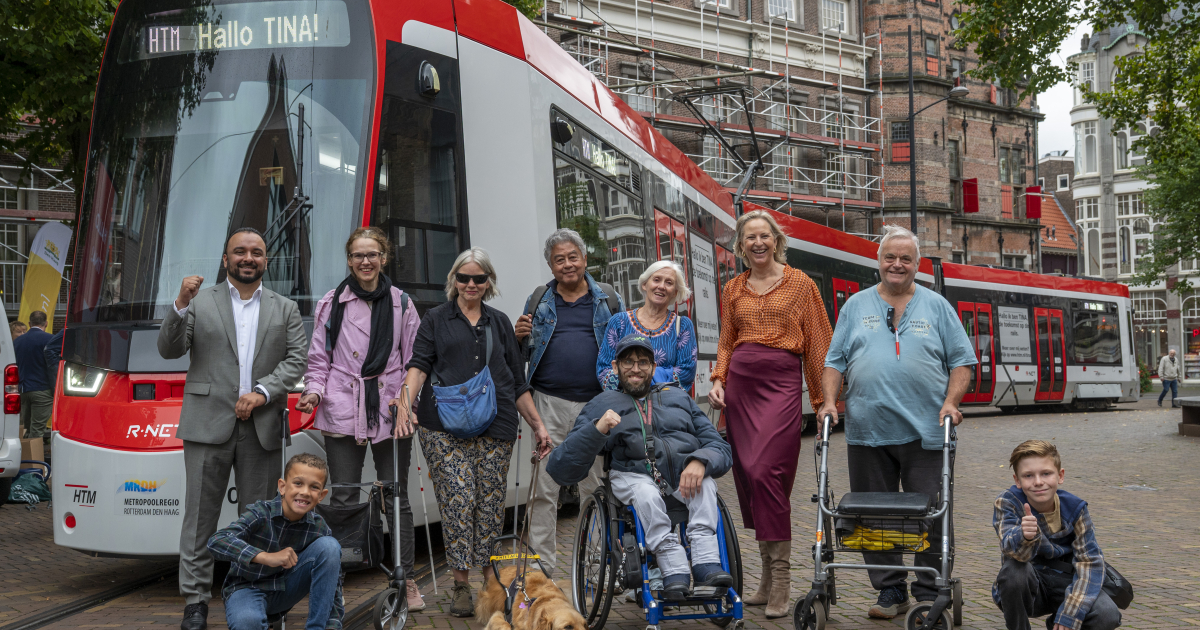
Earlier this month new TINA trams has started to transport inhabitants and visitors. The trams have a low-floor design that makes boarding easier for passengers with reduced mobility, including wheelchair users and people travelling with pushchairs. As more TINA trams enter service, they will contribute to making everyday travel around The Hague more accessible and comfortable for a wider range of passengers.